26 November 2026
How to Choose the Right Chauffeur in Barcelona
Presented by @chauffeurservicecorner
Choosing a chauffeur in Barcelona is less about luxury branding and more about fit. The city rewards good planning. Narrow streets, busy tourist zones, timed entries, hotel access rules and long distances between some districts can turn a simple ride into a frustrating one. A good driver makes the day feel calm. A poor match can leave you waiting at the wrong entrance or paying for time that never moved you closer to your plan.
Start with the job itself before looking at any company or profile. The right choice for an airport arrival is not always the right choice for a full day outside the city. Write down what the day needs to do, then use that brief as your standard when comparing options.
Define the route and the level of service
Begin with the practical shape of the trip. Is it one transfer, a return journey, several stops across town, or a schedule that changes as the day goes on? Point-to-point service works well when the pickup and drop-off are fixed. It keeps the booking simple and makes it easier to compare like with like. If there are several stops, a wait between appointments, or a route that may change, ask for an hourly arrangement instead.
Think about the tone of the day as well. Executive travel usually calls for a quiet vehicle, a driver who understands discretion, and precise timing around a business meeting. A family day may matter more: space for bags, a child car seat, and a driver who is comfortable with slower boarding. A night out service has a different rhythm again, with late pickups, clear meeting points, and a plan for noise and curfews near residential streets.
The more specific the brief, the easier it is to avoid mismatches. Include the hotel name, street address, flight or train details if relevant, the number of passengers, luggage, mobility needs, and the times that cannot slip. If the day includes a venue with several entrances, note the one that suits your plans rather than leaving the driver to guess.

Compare companies on what they actually include
Once the brief is clear, compare providers on substance. A polished website can be useful, but it should not be the only signal. Look for plain answers about the vehicle type, pickup procedure, waiting policy, cancellation terms, and what happens if a flight is late or a road is closed. Clear terms are a good sign because they show where the boundaries sit.
Pay attention to how enquiries are handled. A useful response asks about passenger numbers, luggage, timing and accessibility instead of jumping straight to a booking. If a question about disabled access receives a vague answer, keep asking until the details are concrete. The same applies to a child car seat. Confirm the type, the age range it suits, and whether it will be fitted before pickup.
When searching for private driver barcelona, treat the first batch of results as a shortlist rather than a decision. Read the service pages, check whether the coverage matches your route, and look for consistency between what is advertised and what is confirmed in writing. A company that specialises in transfers may not be the best fit for a custom itinerary with multiple stops.
Check the vehicle against the real passenger list
Vehicle choice sounds simple until bags, coats and heat enter the picture. A car that seats four adults may not hold four suitcases. If the day includes shopping, luggage from a hotel checkout, or equipment for an event, say so at the enquiry stage. A larger vehicle can be worth it even when the passenger count seems modest.
Comfort also depends on the route. For a short city transfer, a compact executive car may be easier around central streets. For a longer drive along the coast or into the hills, passengers often appreciate more legroom and a smoother ride. If anyone is prone to motion sickness, ask for a vehicle and route that avoid stop-start driving where possible.
Access needs deserve the same care. Wheelchair space, folding mobility aids, step height and door width are not details to leave to chance. If disabled access is required, request the exact vehicle arrangement and confirm how the passenger will enter and travel safely. If the provider cannot describe this clearly, choose another option.
Ask how timing is managed
Good timing is not just arriving on time. It is knowing what to do when the normal plan breaks. Ask how pickup times are set for airport arrivals, train stations, hotels and private addresses. For flights, the pickup should usually account for landing time, baggage and walking to the arrivals area. For a hotel, the driver needs to know where vehicles can stop without blocking traffic.
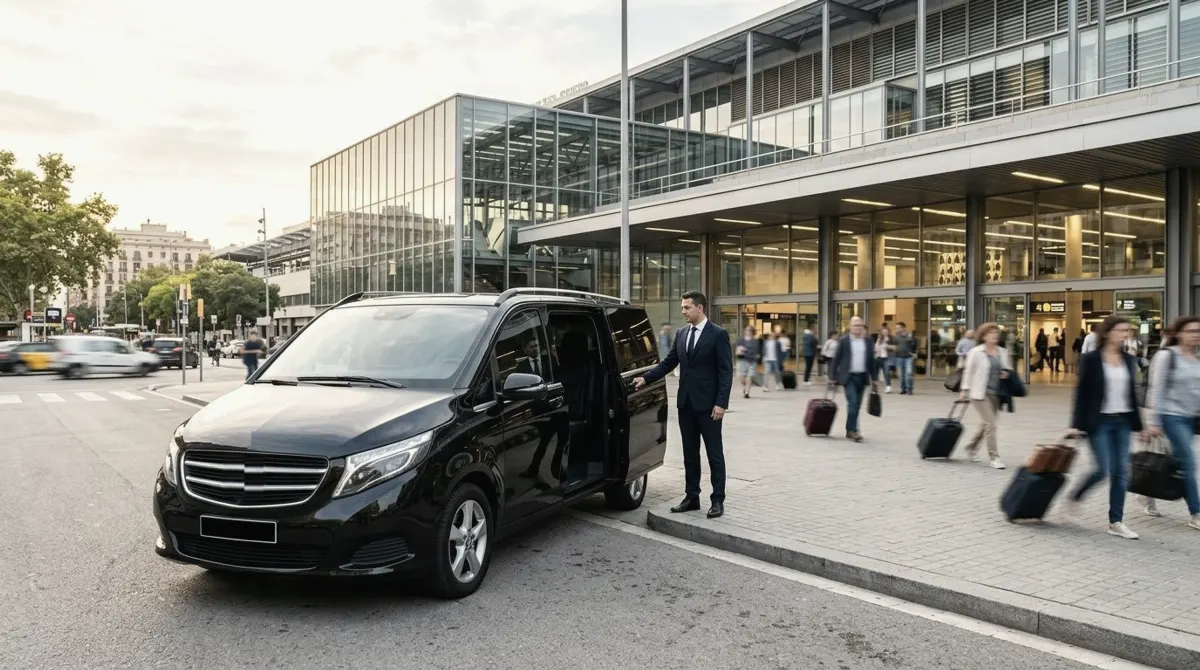
Watch for vague language around waiting. A transfer booking often includes a limited waiting window, while an hourly booking usually works differently. The distinction matters if a flight is delayed, a restaurant runs late, or a meeting overruns. Ask what happens next, and get the answer in the booking confirmation.
For a tight schedule, build a little breathing room into the plan. Barcelona traffic can be heavy at peak times, and popular areas may have road restrictions or crowded access points. A driver who knows the city can adjust the route, but no driver can remove every delay. Realistic timing is part of good judgment.
Read the terms before paying
Before committing, read the booking terms with the same attention you would give a hotel or flight. Check what is included, what counts as extra time, and how changes are handled. Look for clear rules on pickup location, waiting, route changes, cancellations and payment. A fair agreement does not need to be long, but it should be readable.
Be wary of quotes that leave major points open. If the confirmation does not name the vehicle category, number of passengers, pickup time and service length, ask for it to be corrected. For wedding transportation, confirm the timing around the ceremony, photos and venue changeovers, since a short delay can disrupt the whole schedule. For business travel, ask whether invoices and booking references can be provided in the format the company needs.
It is also sensible to check how the driver will be identified at pickup. A clear arrangement avoids awkward searches outside a station or hotel. Confirm the meeting point, the vehicle description, and whether contact is made on arrival. Keep the booking details accessible, but avoid relying on a single device with no battery.
Match the driver's style to the day
A chauffeur service should feel appropriate, not theatrical. Some journeys benefit from a quiet ride with minimal conversation. Others are easier with a driver who can explain the pickup point, help with doors, or keep flexible while plans shift. If the day is formal, say so. If it is a family outing, say that too.
Language can matter. If passengers need directions, local context or help at a venue, ask whether the driver speaks the language required. If not, a simple written address and a clear pickup plan can still make the day run smoothly. The aim is not constant conversation, it is reliable communication when something needs to be settled.

For a custom itinerary, share the order of stops and any fixed booking times. A driver who understands the purpose of each stop can make better choices about parking, drop-off points and timing. This is especially useful in the old city, near major attractions, and around venues where vehicle access is limited.
Make the final choice on clarity
By the end of the comparison, the best option is often the one that answers questions most clearly. Look back over the brief and the responses. Does the service cover the route, the passengers, the timing and the access needs? Are the inclusions written down? Does the plan still make sense if there is a delay or a change of entrance?
A private driver should remove friction from the day, not add another thing to manage. Choose the provider that understands the job, sets expectations plainly, and gives the driver enough detail to work well. When those pieces are in place, the ride becomes a quiet support to the plans rather than a problem of its own.